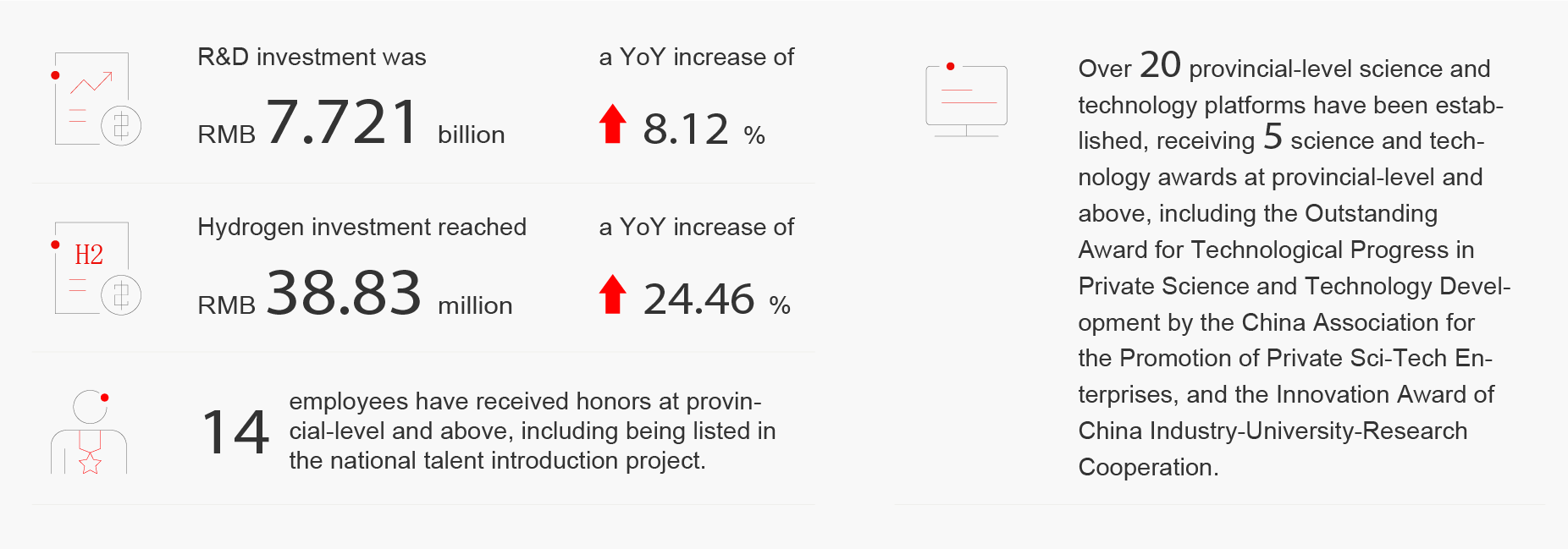
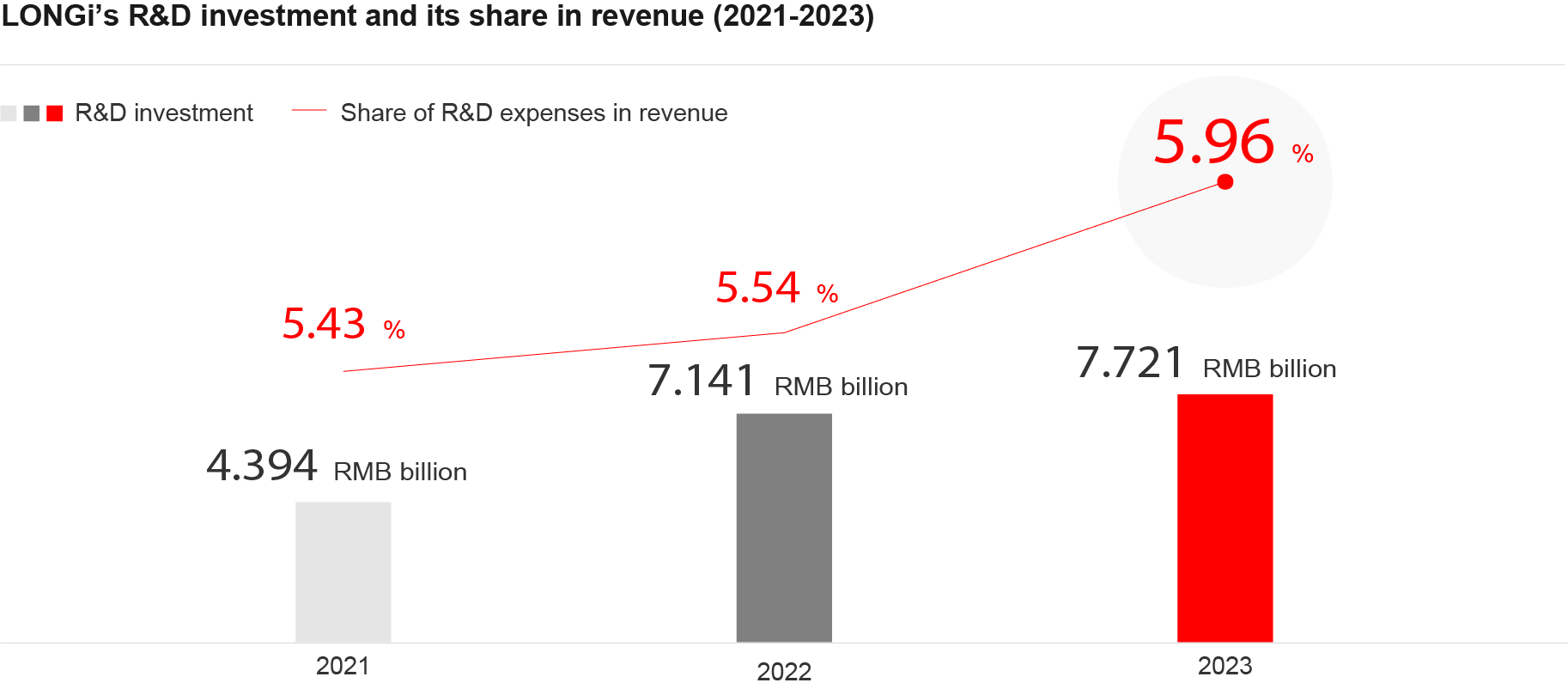
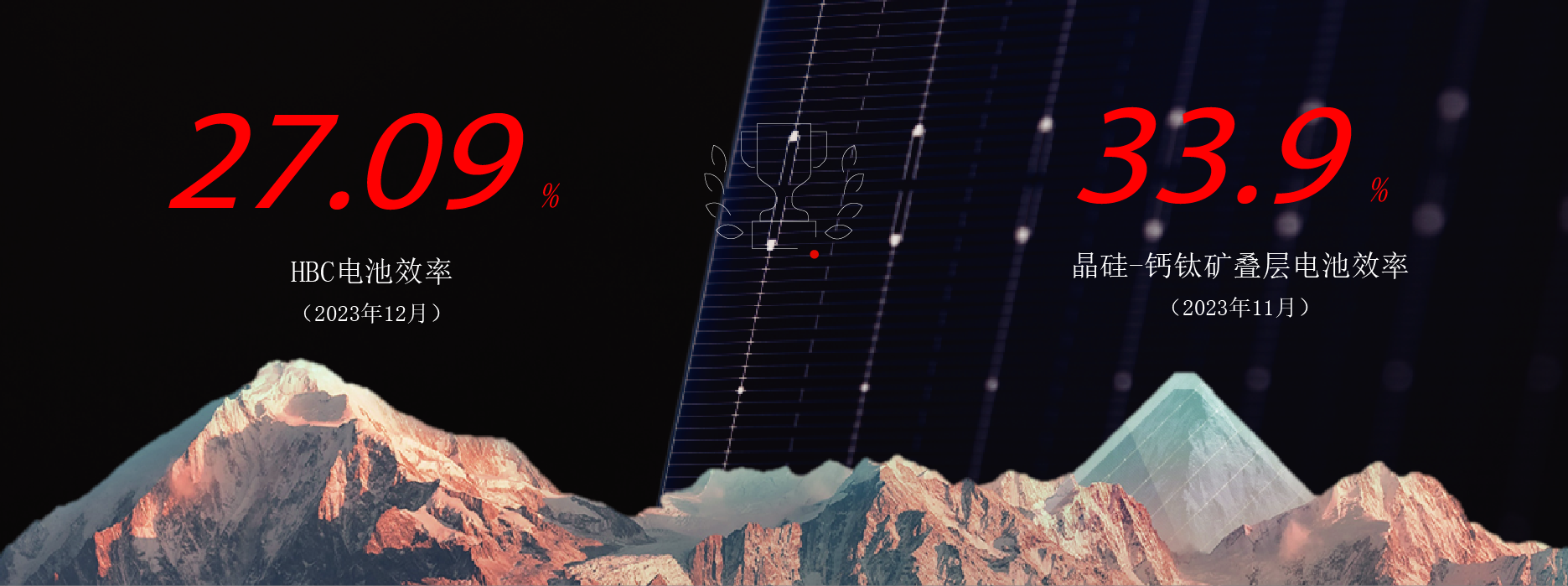
Adhering to its “3+1” technological innovation concept, encompassing producing, developing, researching and exploring new generation of technologies, LONGi improved its technological innovation system, boosted digital and smart transformation, standardized innovation management operations, strengthened intellectual property management, and accelerated the application of innovative outcomes to comprehensively enhance the Company’s scientific and technological strength, serving as a new benchmark for technological leadership in clean energy.
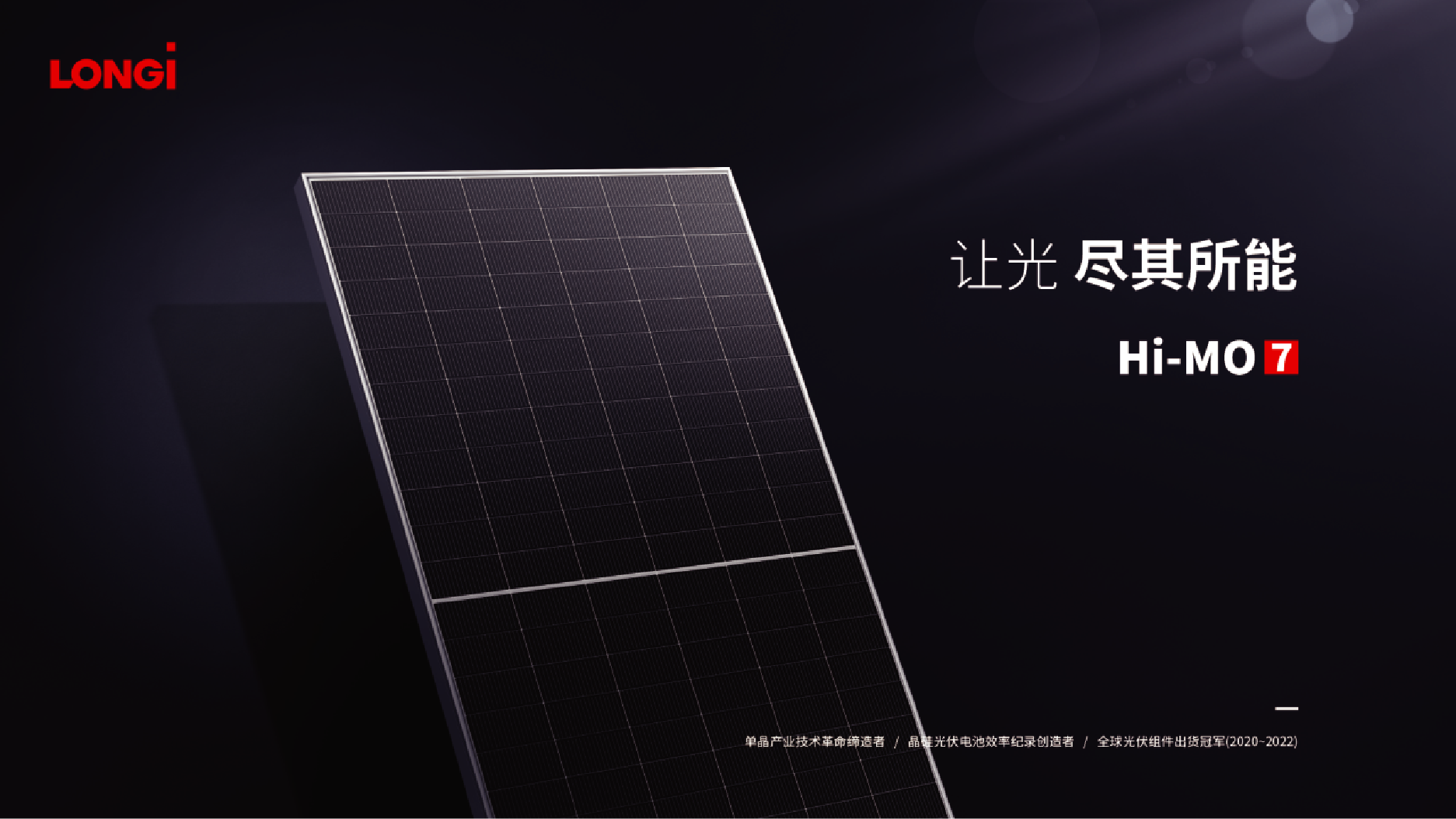
LONGi launched its Hi-MO 7, a new module based on HPDC technology. With a mass production power of 580W and a conversion efficiency of 22.5%, this product is created by LONGi for large ground power stations around the world. Besides its high efficiency, the Hi-MO 7 module also features high-quality monocrystalline silicon wafers, customized cell pastes, optimized module encapsulation film systems, SMBB high precision interconnection, and high-reliability automatic welding of junction boxes, further ensuring product reliability throughout its lifecycle.
LONGi unveiled the distributed Hi-MO X6 high-efficiency anti-dust PV module. Featuring HPBC technology and busbar-free design in tis front-side, Hi-MO 6 can increase light absorption by 2.27% while maintaining its aesthetic appearance. More importantly, the innovative frame design allows the solar panel to effectively utilize rainwater to wash away dust, solving the long-existing problem of dust accumulation in the distributed PV market. Comparative data shows that solar panels with anti-dust features can achieve a power generation gain of 2.04%, with a maximum gain of up to 6%.
LONGi, together with Center INT, a building construction company, introduced its new-generation BIPV product LONGi ROOF 4.0, the world’s first commercial and industrial rooftop PV system equipped with BC batteries. Based on the HPBC cell technology, ROOF 4.0 can reach a record-high efficiency of 22.6% and an output of 580W. The product is safe and reliable, meeting Class A fire protection rating, the highest level, Class I, of waterproof rating, and resistant to 17-level typhoon. Such features make it suitable for 99.9% of regions in China.
LONGi launched its Hi-MO 7, a new module based on HPDC technology. With a mass production power of 580W and a conversion efficiency of 22.5%, this product is created by LONGi for large ground power stations around the world. Besides its high efficiency, the Hi-MO 7 module also features high-quality monocrystalline silicon wafers, customized cell pastes, optimized module encapsulation film systems, SMBB high precision interconnection, and high-reliability automatic welding of junction boxes, further ensuring product reliability throughout its lifecycle.
LONGi unveiled the distributed Hi-MO X6 high-efficiency anti-dust PV module. Featuring HPBC technology and busbar-free design in tis front-side, Hi-MO 6 can increase light absorption by 2.27% while maintaining its aesthetic appearance. More importantly, the innovative frame design allows the solar panel to effectively utilize rainwater to wash away dust, solving the long-existing problem of dust accumulation in the distributed PV market. Comparative data shows that solar panels with anti-dust features can achieve a power generation gain of 2.04%, with a maximum gain of up to 6%.
LONGi, together with Center INT, a building construction company, introduced its new-generation BIPV product LONGi ROOF 4.0, the world’s first commercial and industrial rooftop PV system equipped with BC batteries. Based on the HPBC cell technology, ROOF 4.0 can reach a record-high efficiency of 22.6% and an output of 580W. The product is safe and reliable, meeting Class A fire protection rating, the highest level, Class I, of waterproof rating, and resistant to 17-level typhoon. Such features make it suitable for 99.9% of regions in China.
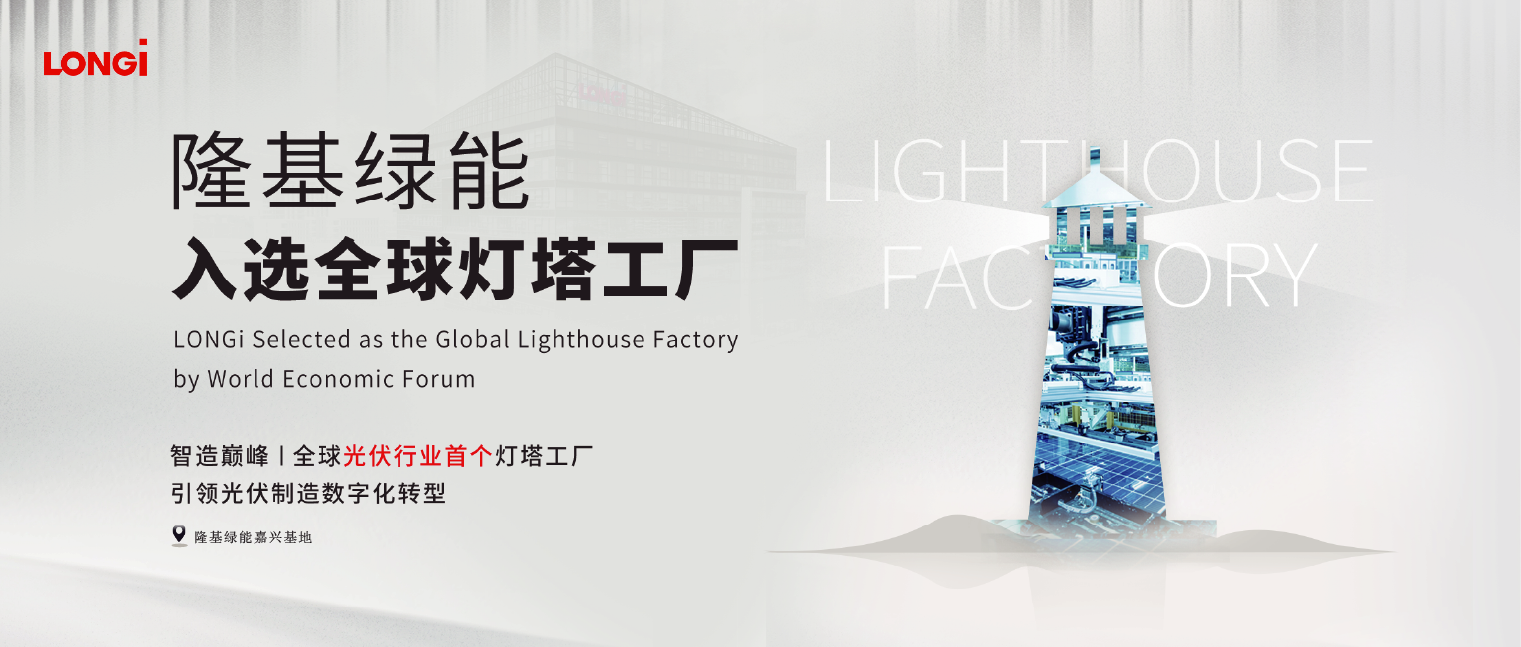
Case| LONGi’s Jiaxing production site: the first Lighthouse Factory in the PV sector
LONGi completed its Lighthouse Factory project within 9 months since its initiation in 2022. Empowered by the extensive adoption of new technologies like industrial Internet, big data, and artificial intelligence, Jiaxing LONGi Solar developed over 30 AI models and algorithms to drive the application of smart manufacturing outcomes.
Overall Equipment Effectiveness (OEE) Management System
Covering 20 production lines, the unified system interconnects over 900 devices and more than 210,000 data points. This has risen 30% or more in production line OEE and single-line daily output, and save 28% of time on average in solving equipment issues.
As an industry-first patented technology, it can complete the source machine information identification of 12 cell strings every 18 seconds after imputing the real time AI chain tracing models. Such technology can also identify anomalies quickly and precisely, providing solutions for the challenge related to traditional barcode tracing limitations and low accuracy of virtual code tracing in producing components.
Automatic Flexible Production
Such system overcomes 7 automatic production problems, enabling one-click switching of product types to meet personalized customer product demands. Currently, the overall automation rate has exceeded 90%.
Working jointly with partners along the industrial chain, LONGi has advanced nearly 100 projects, organized close to 60 technical exchange events. As a result, we have solved over 80 technical problems, covering many core areas in clean energy technology, such as silicon wafers, cells, modules, recycling, and smart manufacturing.
School-enterprise cooperation
In 2023, we actively introduced quality resources to establish a platform combining industries, academy and research institutions. To that end, we have built stable cooperation relationships with over 30 top universities and research institutes including Tsinghua University, Institute of Electrical Engineering of Chinese Academy of Sciences, Lanzhou University, and Northwest University. The LONGi Solar also collaborated with the School of Photovoltaic and Renewable Energy Engineering of UNSW on a joint project to train talents in new energy technologies.
International cooperation
We engaged actively with the International Green Hydrogen Organization (GH2) in green hydrogen and signed a strategic cooperation framework agreement during the COP28, aiming for deep cooperation in the future on international green hydrogen standards and certification, and green hydrogen industry planning.
31
In 2023, we participated in the formulation and revision of external technical standards
3
National standards
119
As of the end of the reporting period, we have contributed to the formulation and revision of external technical standards cumulatively.
 Europe English